
MEET REBEKAH

Hello! I am a theatre artist, educator, director, and curriculum developer whose work centers embodied learning, ensemble practice, and what I call joy as rigor. Whether teaching Shakespeare, acting, sketch comedy, or improvisation, I believe students learn most deeply through active experimentation, reflection, collaboration, and return.
I currently teach at Los Angeles Harbor College and the Rodney Dangerfield Institute at Los Angeles City College Extension, and I have taught at The Second City since 2008. I have also taught at Loyola Marymount University, Lesly Kahn & Co., and The Sketch School, working with actors and writers across stage and screen.
As the former Artistic Director of Bare Boned Theatre in Chicago, I co-created and executive produced The Ville, a live LGBTQIA+ soap opera developed with and for Chicago’s queer community. My artistic practice spans regional theatre, devised performance, comedy, Shakespeare, and ensemble-based new work.
I hold an M.F.A. in Performance Pedagogy from Loyola Marymount University and a B.A. in Theatre Arts from San José State University.
RESEARCH
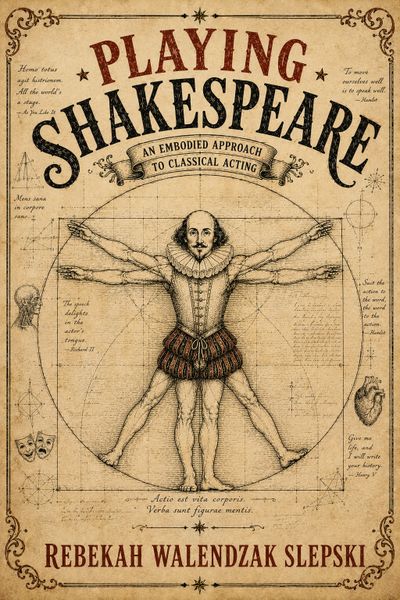
Playing Shakespeare & the Play-Process-Return Model
My research investigates embodied and ensemble-based approaches to theatre pedagogy, with particular attention to Shakespeare, rehearsal-based inquiry, improvisation, and collaborative performance training. My M.F.A. thesis, Playing Shakespeare: An Embodied Approach to Classical Acting, explored how students can access classical text through experimentation, reflection, and performance rather than primarily through literary analysis.
Developed through an upper-division Shakespeare course, the project introduced Play–Process–Return: students first encounter material through embodied exploration, reflect on what they discover, and return to the work with greater specificity and collaborative awareness. The research draws from Michael Chekhov, Laban/Bartenieff, Viola Spolin, Cicely Berry, Augusto Boal, and ensemble-based performance traditions.
My broader research interests include comedy pedagogy, devised theatre, Global Majority performance traditions, accessibility, ensemble creation, practice-as-research, and the relationship between joy, rigor, and sustainable artistic process.
CLASSICAL TEXT & CONTEMPORARY PERFORMANCE

The Importance of Being Earnest — Long Beach Shakespeare Company
Director | Long Beach Shakespeare Company
For The Importance of Being Earnest, I placed Oscar Wilde’s Victorian comedy in conversation with the theatrical self-invention of the early-1980s New Romantic movement. Drawing visual inspiration from Grace Jones, Adam Ant, Steve Strange, Patrick Nagel, and David Hockney, the production explored the ways we construct and perform identity—in Wilde’s world and our own.
The production used the play’s movement between city and country to chart that tension. In London, the Victorian world began to collide with New Romantic style, heightened physicality, and theatrical play, reflecting the way cultural change often takes hold first in urban centers. When the action moved to the country, the production returned to a more traditionally Victorian visual world—a place where established conventions and expectations remained firmly intact. Across both worlds, the characters and social structures remained rooted in Wilde, allowing the contrast to reveal something already embedded in the play: nearly everyone in Earnest is performing a version of themselves.
Writing for Random Lengths News, Greggory Moore praised the production’s heightened comic approach and its willingness to invite the audience in on the joke:
“Slepski’s NewRo take deliciously leans into the silly…” — Random Lengths News
Stage and Cinema described the production as delivering Wilde’s classic “with clarity and charm.”
“There are always new ways to stir up old embers and generate a little present-tense warmth.” — Random Lengths News
COMMUNITY-CENTERED SHAKESPEARE
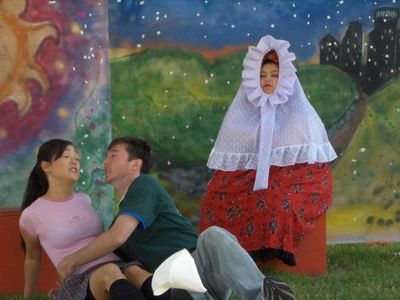
A Midsummer Night's Dream — East LA Rep, Los Angeles
Director
This production of A Midsummer Night’s Dream was conceived as a love letter to East Los Angeles: a culturally specific, community-centered adaptation honoring the neighborhood’s humor, rhythms, visual language, and collective imagination.
The fairy world was reimagined through Mexican-American archetypal figures drawn from East Los Angeles community life. Titania was inspired by Frida Kahlo, Oberon by Chicano zoot suit culture, and the fairy ensemble incorporated folklórico-inspired movement. Bottom became a contemporary fame-seeking actor, translating Shakespeare’s comic ego into a recognizable performance archetype.
Rehearsals centered ensemble authorship, embodied play, and collaborative storytelling, inviting actors to bring personal and cultural knowledge into the work.
ORIGINAL WORK, QUEER STORYTELLING & SERIAL PERFORMANCE

The Ville — Bare Boned Theatre, Chicago
Executive Producer / Director | 2008–2010
The Ville was a live, episodic LGBTQ+ soap opera inspired by Chicago’s Andersonville neighborhood. As Executive Producer and Director, I helped build an ongoing theatrical world in which recurring characters and storylines developed across 19 original episodes, combining the serialized pleasures of a soap opera with the immediacy and comic energy of live performance.
Created for and around Chicago’s queer community, The Ville embraced melodrama, comedy, romance, and unapologetically heightened storytelling. The project centered LGBTQ+ characters not around a single “issue,” but around the messy, funny, interconnected lives of a community—and invited audiences to return episode after episode to see what happened next.
Jonathan Abarbanel selected The Ville as one of his “Stage Door Jonny’s Pride Picks” in Windy City Times:
“Its tone is firmly in its cheeks.”
— Jonathan Abarbanel, Windy City Times
DEVISING, ADAPTATION & ENSEMBLE CREATION

The Hecubae — Bare Boned Theatre, Chicago
Co-Writer / Devising Artist
Created with director and adaptor Jeffrey Bouthiette and an ensemble of seven women, The Hecubae placed Euripides’ Hecuba in conversation with contemporary refugee experiences. Drawing on dramaturgical research into current refugee situations, we used improvisation and ensemble devising to develop a companion narrative exploring the experiences of women displaced by war.
Rather than simply relocating Euripides’ story to a contemporary setting, the process asked performers to move between ancient and modern worlds, using the distance between them to examine what changes—and what persists—in experiences of war, displacement, grief, survival, and community.
“The Hecubae succeeds by fleshing out suffering and solace, making both too real to ever be comfortingly abstract.”
— Lawrence Bommer, Chicago Free Press — Recommended
SOLO PERFORMANCE & COMEDY

The Booby Prize — Hollywood
Director | Los Angeles | Written & Performed by Lizzie Czerner
I was brought on to direct Lizzie Czerner’s autobiographical solo comedy The Booby Prize, developing an earlier storytelling-based version into a more fully theatrical performance.
Together, we expanded the piece through physicality, character work, staging, and heightened comic choices while preserving the vulnerability and personal voice at the center of Lizzie’s story.
The production was presented as part of Spumoni!, which received an LA Weekly “GO” recommendation.
“Tracey Ullman-like flamboyance” — LA Weekly
SKETCH COMEDY & IMPROVISATION
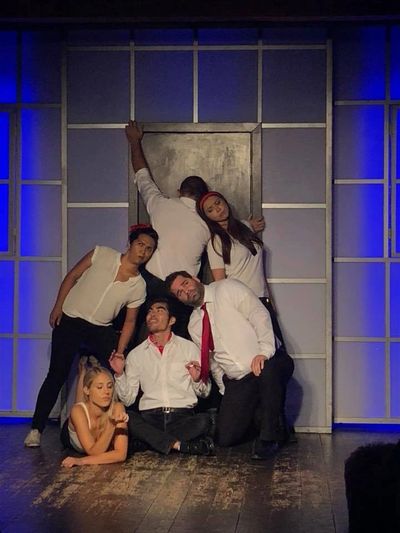
The Second City — Chicago & Hollywood
Faculty, Instructor, Director (2008–Present)
Since 2008, I have taught, directed, and developed curriculum at The Second City across acting, improvisation, sketch writing, musical improvisation, and comedy television writing. Alongside teaching, I have directed ensemble-based graduation revues, devised performances, musical sketch revues, and fully improvised musicals.
My directing and teaching practices emphasize authorship, ensemble intelligence, adaptability, repetition, and sustainable creative process. Across rehearsal rooms and classrooms, I guide performers through fast-paced collaborative creation that develops responsiveness, specificity, musicality, and artistic confidence.

Recovery-based Sketch Comedy at Sketchfest - Chicago
Däs Glümlöt
Director | Chicago Sketchfest
I directed Däs Glümlöt , a recovery-based sketch comedy ensemble that used humor to explore sobriety, addiction, and the shared experiences of recovery. The work drew on the performers’ lived experiences, using sketch to find comedy, connection, and community in material that could otherwise feel difficult or isolating.
At Chicago Sketchfest, I directed the ensemble in an original sketch show at Stage 773, bringing together character, satire, and ensemble-driven comedy while keeping the specificity and voices of the performers at the center of the work.